
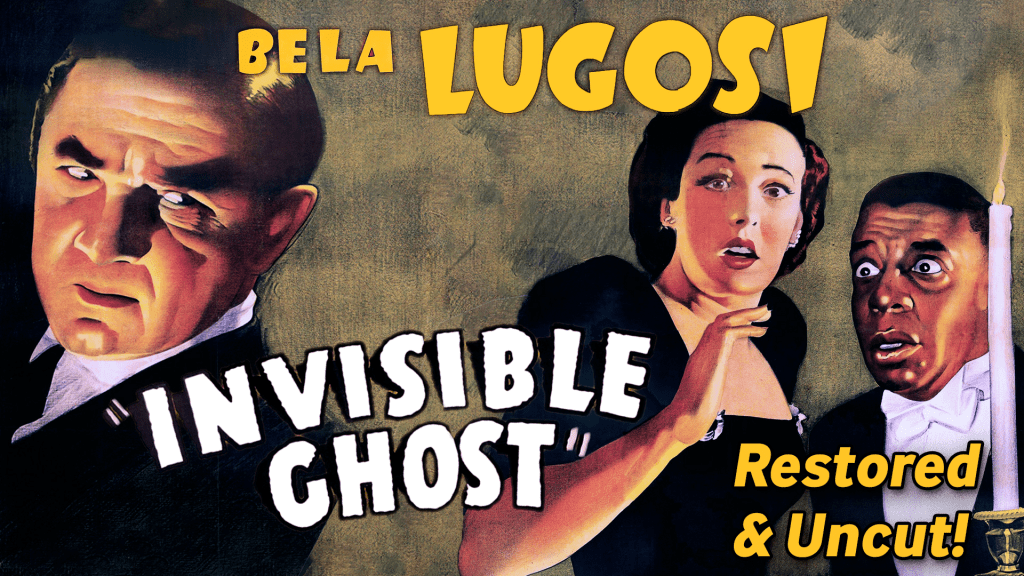
The “Poverty Row Picture Show” is an ongoing series exploring the horror films of Monogram Pictures, Republic Pictures, and PRC, known as the “poverty row” movie studios of Hollywood’s Studio Era. Poverty Row movies were marked by limited budgets, outlandish concepts, and questionable performances. While not great, there remains an everlasting charm with enough star wattage – Boris Karloff, Bela Lugosi, John Carradine, and others – to keep you coming back. As they say, to be in a Poverty Row picture, your career was either moving up or going down!
Bela Lugosi returns to the Poverty Row Picture Show in Invisible Ghost, a creaky little thriller from Monogram Pictures. After Devil Bat, Lugosi took off at studios like PRC and Monogram; at the latter, Lugosi would become the face of the studio. Alas, Invisible Ghost is a stumble out of the gate. Yes, the bar is low for any of the films featured in this series, but Invisible Ghost barely rises to meet the lax standards; the plot is tattered with holes and there is a racially charged moment asking for analysis. With that said, there are fun elements to the picture including Lugosi, his African American costar Clarence Muse, and moments of directorial flair by Joseph H. Lewis.
Director: Joseph H. Lewis
Screenplay: Helen Martin, Al Martin
Producers: Sam Katzman, Pete Mayer
Cinematography: Harvey Gould, Marcel Le Picard
Editing: Robert Golden
Music: Charles Dunworth, Lew Porter, Heinz Roemheld
Select Cast: Bela Lugosi, Clarence Muse, Betty Compson, Ernie Adams, Ottola Nesmith, Polly Ann Young, John McGuire
Runtime: 64 minutes
Country of Origin: USA
Release: April 25, 1941. Monogram Pictures
Invisible Ghost is about Dr. Charles Kessler (Lugosi) lamenting the loss of his wife (Betty Compson), whom he believes died years ago in an automobile accident. However, Mrs. Kessler has actually been kept under lock and key by the house caretaker and his wife (Ernie Adams and Ottola Nesmith, respectively), in their cellar. Mrs. Kessler suffers from mental dissociation, but her real conundrum is that the caretaker won’t reveal her until she “feels better”. At this moment the plot begins wearing thin and the seams grow more apparent over the runtime.
As for Dr. Kessler, he actually does see his wife several times when she escape her imprisonment to stand beneath his window. Each time, when the Kesslers lock eyes, the doctor grows entranced by an apparent spell and falls into a murderous fugue state. Servants and guests in the house become victims to Dr. Kessler’s attacks. The police are called but have trouble suspecting Kessler; it’s as if the well-liked community doctor could never be capable of such crimes. Instead, the detectives blame the murders on Evans, the butler (Muse) despite zero evidence pointing to his involvement. Because Evans is black, his interrogation is laced with a racially charged threat; the white authorities never mention his color, but anyone attuned to American history will understand the danger Evans is in. Before he is arrested, however, Mrs. Kessler arrives on the scene sending her husband into his trance. Naturally Dr. Kessler tries to strange the detective, is killed, and everyone breathes a sigh of relief.
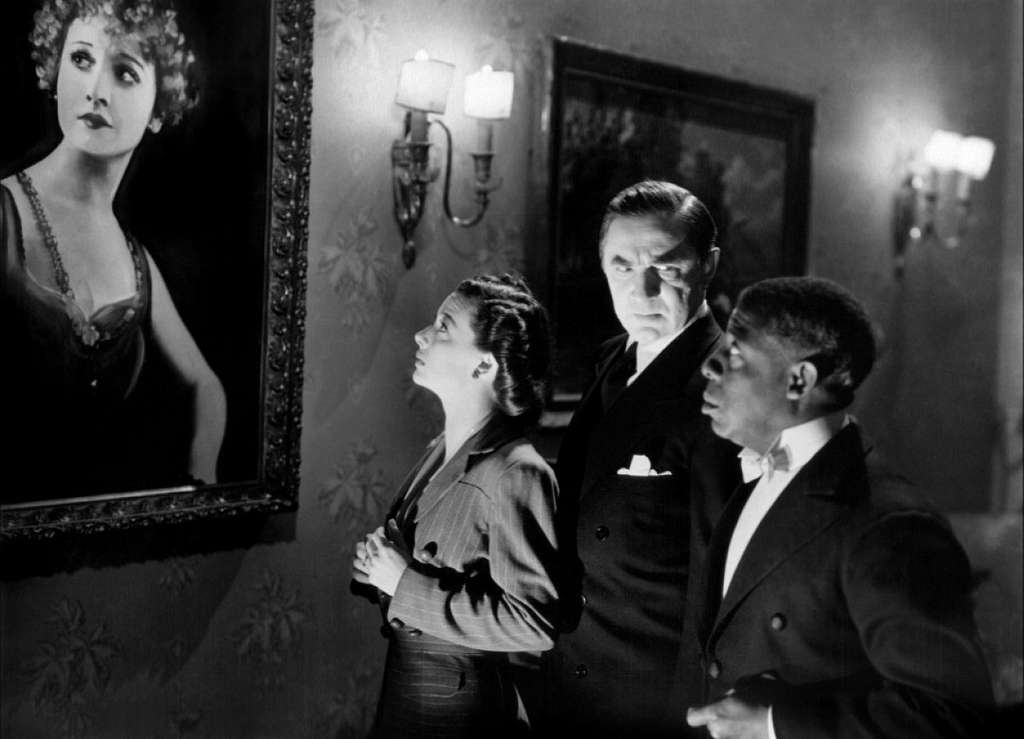
The screenplay was written by Helen Martin and Al Martin. Based on this reviewers research, Helen Martin may be the Helen Martin, a noted African American stage and screen actor. However, this cannot be verified, nor can any relation to Al Martin. For the sake of this review, let us say that the Helen Martin is indeed the cowriter. That would change the lens through which Evans is viewed! As an African American, Martin would have intuitively understood the history of scapegoating Blacks to save the reputations of Whites in America. It is a sobering moment in an otherwise humdrum film; and actor Clarence Muse rises above the material to shade Evans with humor, pathos, and sincerity. (Muse began his career in the theatre of the Harlem Renaissance and enjoyed a long career on stage and screen. He worked until his death in 1979.)
Alas, despite the powerful instincts of Helen Martin, Invisible Ghost does not make much sense as a story. Plot holes abound and reasons for the action are rarely justified. For example, why does the sight of Mrs. Kessler throw Dr. Kessler into a murderous trance? Why does nobody move out of the house after the first murder, let alone the second and third? Why is this called “Invisible Ghost” when there is neither ghosts nor invisibility at play?
Trying to convey the impossible is director Joseph H. Lewis, who had a similar job in Boys of the City (1940). He imbues Invisible Ghost with the occasional flair; stark lighting and POVs through storm-battered windows go a long way.
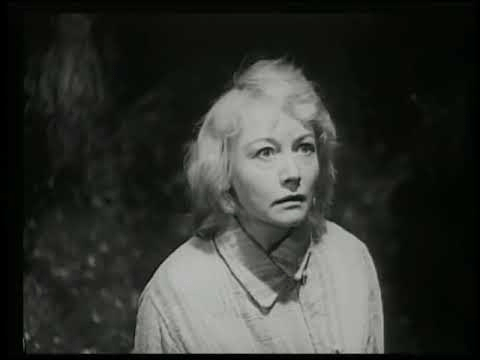
Invisible Ghost, therefore, does have an air of “so-bad-it’s-good” and the runtime is a digestible 64 minutes. Lugosi is always a delight, even if he is a one-trick pony, leering into the camera and stiffly ambling down hallways (a la his Monster in Frankenstein Meets the Wolf Man). Still, despite the camp factor, Invisible Ghost is difficult to recommend to anyone but the curious.
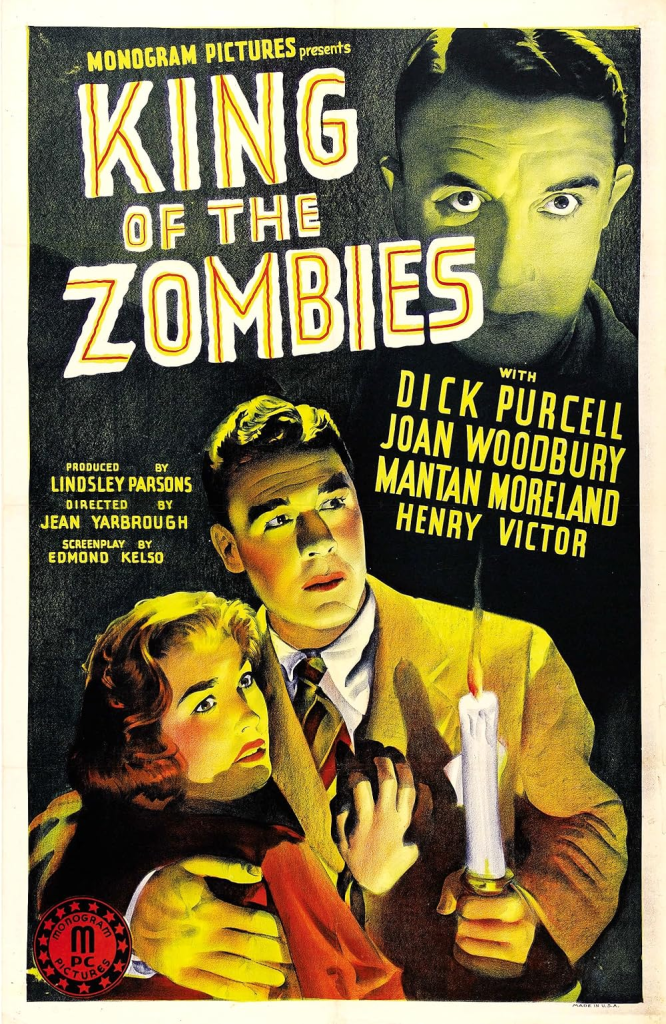
Next time on the Poverty Row Picture Show, we’re visiting the zombie genre with 1941’s King of the Zombies from Monogram Pictures. This romp is about three Americans who unwittingly find themselves on a Caribbean island inhabited by voodoo witch doctors, zombies, and Nazis!
Don’t miss the next review – enter your email here!
And follow CAMP KAIJU wherever you podcast!
 Camp Kaiju