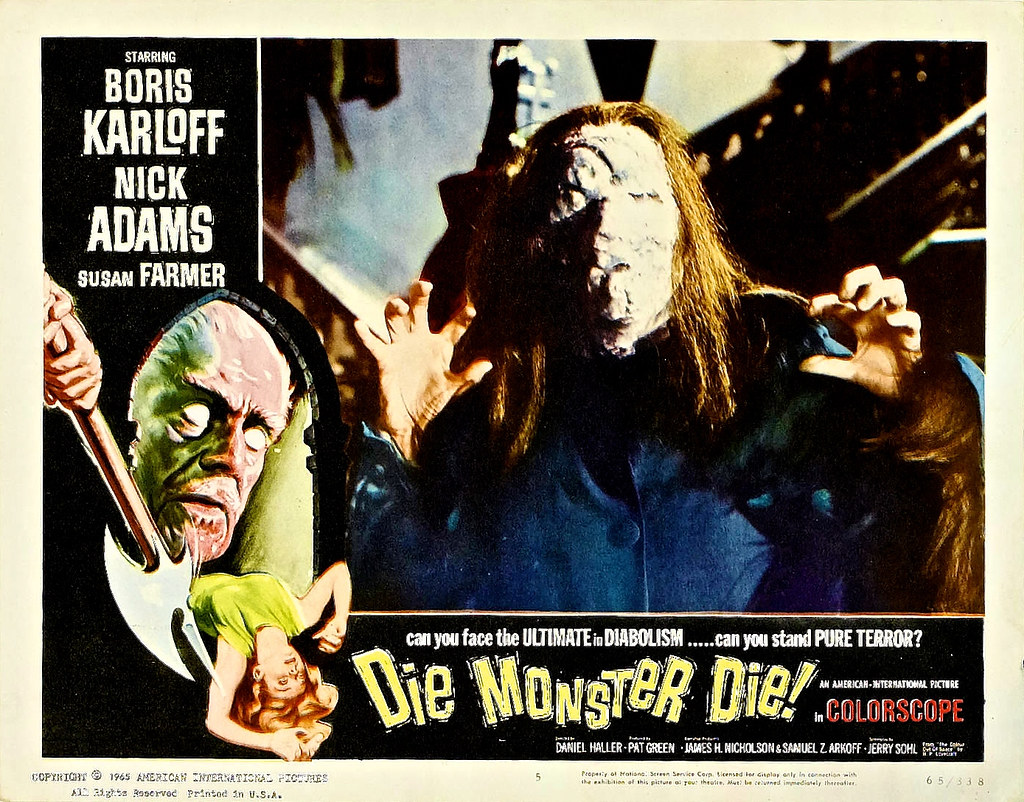
Die, Monster, Die! is a beautiful encapsulation of all things macabre, spooky, Gothic, and ghastly. This beauty is literal through the bright, yet moody, photography and also less tangible through the campy, yet sincere, performances. Along with some ghoulish special effects, this haunted melodrama from American International Pictures surpasses expectations.
Director: Daniel Haller
Screenplay: Jerry Sohl
Producers: Pat Green
Cinematography: Paul Beeson
Editing: Alfred Cox
Music: Don Banks
Select Cast: Boris Karloff, Nick Adams, Suzan Farmer, Freda Jackson
Runtime: 80 minutes
Country of Origin: UK, USA
Release: October 26, 1965 (UK); October 27, 1965 (USA); Alta Vista Productions, American International Pictures
The extravagantly-titled Die, Monster, Die! is a loose adaptation of the short story, “The Colour Out of Space”, by horror author H.P. Lovecraft. (Lovecraft’s tale has had other film adaptations, including Richard Stanley’s definitive 2019 take.) This 1965 version, penned by sci-fi writer Jerry Sohl, remains true to the fictional village of Arkham but relocates the setting from New England to the UK, where American Stephen Reinhart (Nick Adams) travels to meet the family of his fiancée (Suzan Farmer). Her father (Boris Karloff) is reluctant to have Stephen stay in the manor but concedes to his wife’s hospitality. However, the matriarch of the family (Freda Jackson) is bed-ridden with a mysterious illness that leads to her eventual deformity and demise. It is this mystery that Stephen is compelled to investigate; a stranger in a strange land, he will uncover the secrets of a glowing meteorite that emits cosmic rays, bringing heinous mutations to all those who come near it.
This science fiction horror film is directed by Daniel Haller, who was no stranger to the genre by 1965. Haller had previously worked as the set and art designer for Roger Corman’s House of Usher (1960) and The Pit and the Pendulum (1961). The tonal and aesthetic resemblances to those films are apparent, even if Die, Monster, Die! is unrelated to Corman’s famed Poe cycle. Nevertheless, Haller’s directorial debut is worthy enough to claim status as a spiritual sequel; Haller’s eye for atmosphere feels instinctual as he and cinematographer Paul Beeson unabashedly immerse the story in fog, shadows, and glowing space rocks. The strength of the photography is augmented by several choice special effects that feel both revolting and inspiring; blood effects are rendered brightly over-the-top thanks to the color film, while more frightful mutations are depicted among mysterious shadows.
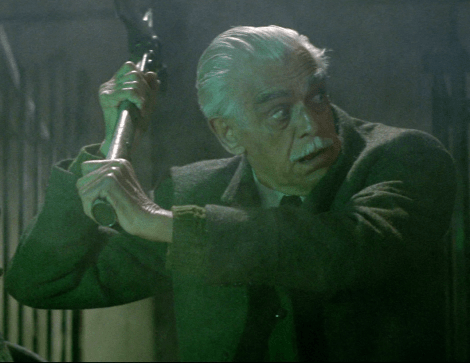
Those looking to satisfy their itch for haunted mansions and beastly monsters will enjoy the technical aspects; however, those wishing for a dash of camp will be satisfied by the performances of Karloff and Adams. Especially Adams, whose New York dialect is wonderfully out-of-place amongst the English rabble. And while this contrast elicits plenty of good-natured laughs, it does serve to accentuate Stephen’s fish-out-of-water situation, no more so than in his scenes with Karloff, who exudes screen presence with his actions; Karloff flexes his chops playing dastardly, wily, charming, calculating, and sympathetic throughout the picture with sublime ease. In fact, he seems to be under-performing at times, so as not to completely steal the show from the ostensible lead!
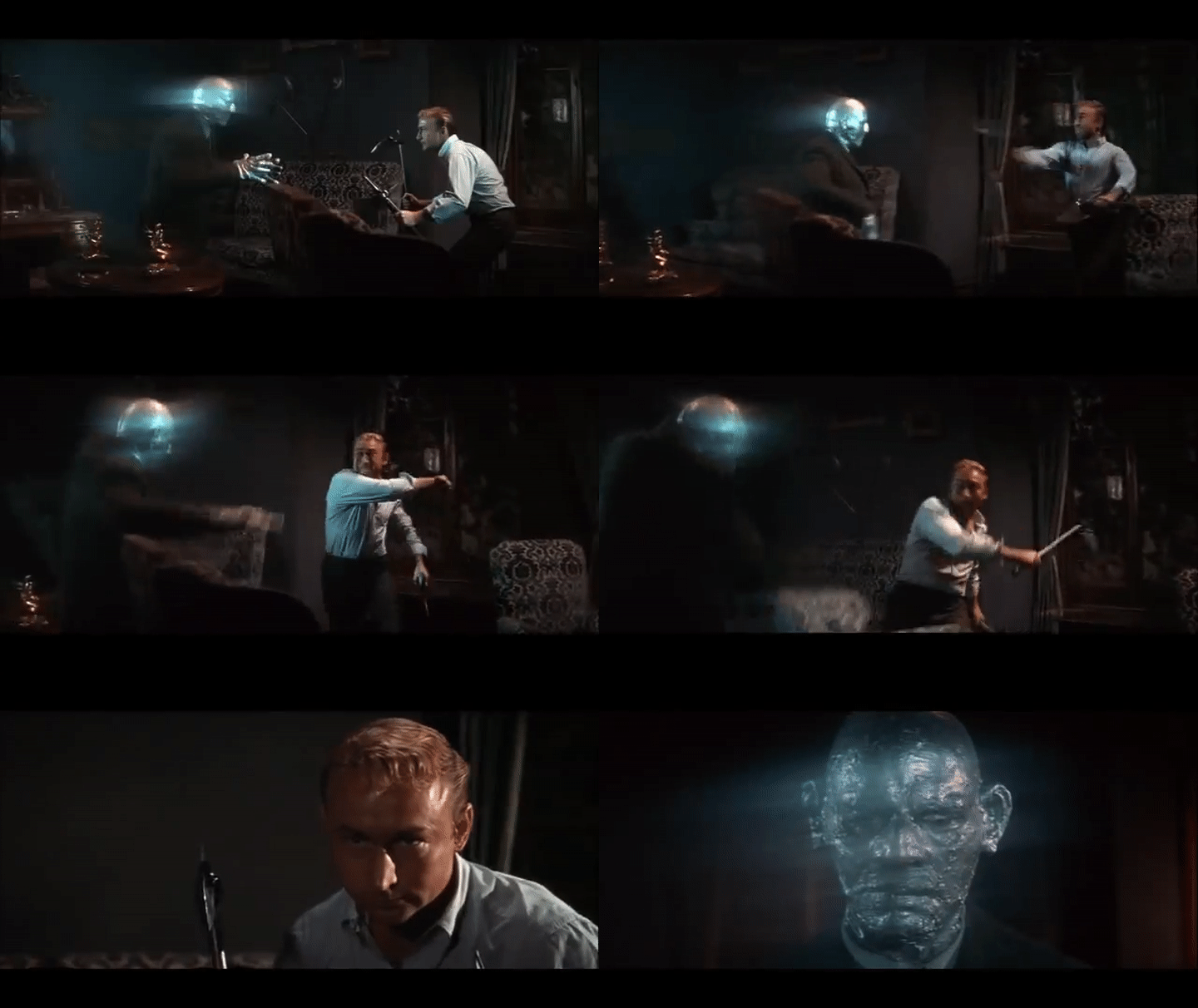
Does Die, Monster, Die! have its flaws? Arguably. As much fun as the special effects are, they can seem dated in the age of digital illusion; this is never more apparent when the film is compared to the aforementioned Color Out of Space (2019). Stanley’s film hits harder because, unlike Haller’s attempt, the special effects are not limited in their story-telling capacity, by virtue of 21st century technology. Fair or not, the production team on Die, Monster, Die! were working with limited resources. Of course, it is those limitations that also demand ingenuity; it is within the margins of Die, Monster, Die! where artistry triumphs in delivering thrills. Whatever the overall limitations, this movie will leave you with lasting images.
by Vincent S. Hannam
Don’t miss the next review! Enter your email here
& follow CAMP KAIJU wherever you podcast!
 Camp Kaiju