
Basket Case is a complicated film. On the surface, it is a well-made schlocker sporting stylized violence and wickedly dark humor. Look a little deeper, however, and it is not a stretch to apply themes of the discrimination disabled people face in the world. This, in and of itself, mostly presents as a poignant meditation on the societal dynamics between the abled and disabled; regrettably, the film also dips into exploitation of the latter.
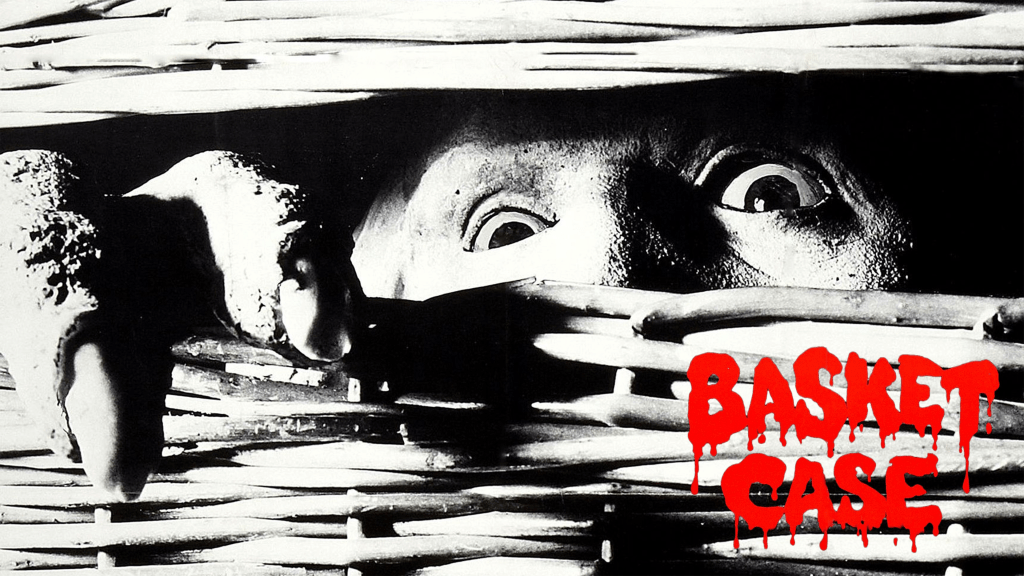
Director: Frank Henenlotter
Screenplay: Frank Henenlotter
Producers: Edgar Ievins
Cinematography: Bruce Torbet
Editing: Frank Henenlotter
Music: David Maswick, Gus Russo
Select Cast: Kevin Van Hentenryck, Terri Susan Smith, Beverly Bonner, Robert Vogel, Diana Browne
Runtime: 91 minutes
Country of Origin: USA
US Release: April 7, 1982; Basket Case Productions
Starting with the production highlights, Basket Case is like no other film. The story concerns a young man named Duane (Kevin Van Hentenryck) who carries his surgically removed conjoined twin in a wicker basket. This twin, named Belial, is a severely deformed ball of flesh with arms and a face with razor sharp teeth. Duane and Belial have come to New York City to enact murderous revenge on the doctors who performed the gruesome separation when they were kids (revealed through a heartbreaking flashback laden with abortion allegories). In the present, the vengeful killing falls to Belial, while Duane develops a romantic relationship with a sweet receptionist (Terri Susan Smith). Conflict arises between the brothers when it is revealed they possess a psychic link to each other’s sexual and violent pursuits.

Not only is the story instantly memorable, but the special effects leave a lasting impression. Belial is brought to life with puppetry and trick effects; less convincing, but equally unsettling, is the clumsy use of stop-motion. Nevertheless, the creature design is all together horrifying. Meanwhile, Van Hentenryck skillfully navigates the demands of Duane’s character that require youthful naïveté, angry young man, cuckolded lover, and envious brother. His inevitable clash with Belial drives home the Cain and Able metaphor. Another highlight worth mentioning is a production design that conveys the rotten cityscape of 1980s NYC, embodied in the flophouse in which Duane resides (and the denizens therein). The fact that all this was achieved on a budget of $35,000 is impressive.
The creator behind Basket Case is Frank Henenlotter as writer and director. This was his first feature and established him as a director of similar horror-comedy exploitation flicks (Brain Damage, Frankenhooker). In his own words, “I never felt that I made ‘horror films’. I always felt that I made exploitation films. Exploitation films have an attitude more than anything – an attitude that you don’t find with mainstream Hollywood productions. They’re a little ruder, a little raunchier, they deal with material people don’t usually touch on, whether it’s sex or drugs or rock and roll.”
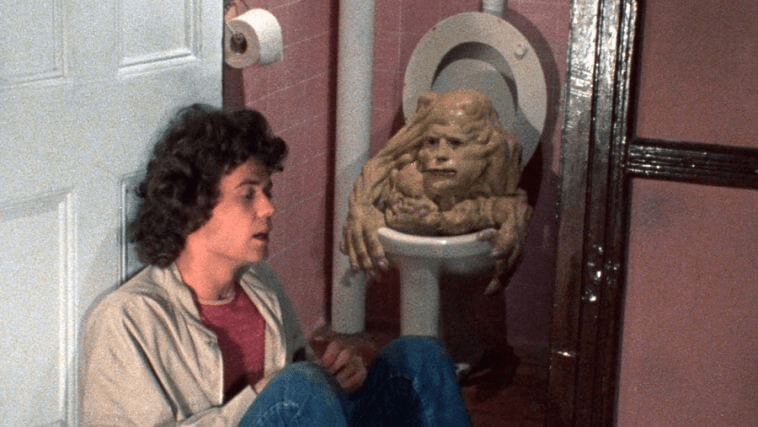
While Basket Case is extremely rude and raunchy, there is an emotional sincerity that has you rooting for Belial in a very Frankenstein way; he’s not a monster he’s just misunderstood. But this is an extremely fine line for Henenlotter and he missteps in the film’s shocking finale, painting Belial as an irredeemable force of evil. While no doubt meant to illicit repulsion, when viewed through a thematic lens of disabled peoples, it is disappointing to portray such a one as hopelessly monstrous.
This is the complicated nature of Basket Case. Belial’s condition is intentionally hard to watch, perhaps as it is so when the able-bodied among us are confronted with physical abnormalities. The film challenges our notions of “normal” and our abilities to accept the disabled into our able-bodied world. Therefore, despite the heinous violence, I accepted the challenge to see Belial as a human being worthy of love and understanding. However, rape cannot be forgiven, even for a tragic figure. By choosing this conclusion, Henenlotter chose to cast the entire disabled community as victims of their conditions rather than empowered agents of their own fates. Had Belial leapt from that window it would have been a powerful act of self-reclamation; a statement of personal agency over one’s life. But as it stands, the film ends in the sleazy exploitation preferred by its director. It is a wasted – if expected – outcome.
by Vincent S. Hannam
Don’t miss the next review! Subscribe and tell a friend.
 Camp Kaiju
One thought on “Basket Case (1982) Movie Review”