
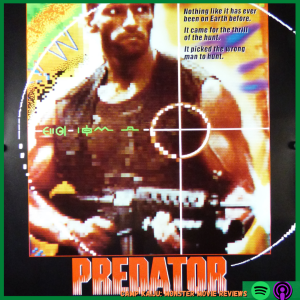
1. Predator (1987) dir. John McTiernan
An elite team of mercenaries descend into the central American jungle to retrieve a kidnapped diplomat, but encounter an extraterrestrial hunter along the way. What ensues is a smorgasbord of ’80s action, guns, and exploding body parts. On the surface – or in the hands of a lesser director – this would be a recipe for a vain machismo exuberance; a dated film of superficiality with nothing to offer broader audiences. This assumption, however, would be near-sighted; Predator features a sharp script delivered by an ensemble crackling with chemistry, who together tell a story of America’s “best of the best” being bested by none other than… an alien. What happens to men who lose their self-perceived glory? What happens to a country that loses its self-perceived invincibility? What keeps Predator fresh is more than its expert special effects and charming players; it is the relevancy of its metaphor, that the United States is both a formidable and vulnerable power.

2. Prey (2022) dir. Dan Trachtenberg
The inverse of John McTiernan’s Predator, this installment from Dan Trachtenberg tells the story of a woman who, rather than having her delusions of power ruptured, seeks to establish a reputation of strength. Where Predator is brash and aggressive, Prey is quieter and deceptively simple. It makes for a seismic shift in tonal approach to the franchise; and considering how previous installments just got louder and more ridiculous, it is refreshing to not only see it all “come down to earth”, but in such an effective way (Trachtenberg had previously directed 10 Cloverfield Lane, which achieved a similar dichotomy within the Cloverfield series). But this is all second to the Native narrative of the picture, which should not be taken for granted; the Comanche Nation was heavily involved in the production. This respect for the overall story, characters, locations, and language bleeds through in the final film in a way that lets Prey transcend its sci-fi Western genre.

3. Predators (2010) dir. Nimród Antal
It is a familiar idea, but executed well. As an ensemble piece, much depends on the cast chemistry. Not only does each performer bring personality and depth to their characters, but each plays well off the others. Alice Braga, Topher Grace, Walter Goggins, Oleg Taktarov, Danny Trejo, Louis Ozawa Changchein, and Mahershala Ali each deserve praise in creating a sense of fun adventure and perilous mystery. Special shout out, however, must be reserved for Laurence Fishburne; his turn as a delusional recluse is both charming and chilling.
Another strength of the ensemble is the ethnic diversity of the cast, including Mexican, West African, Guatemalan, and Japanese. While such multi-national stories are always refreshing, Predators is not free from the stereotypes that can creep into such a concept. The best example is with the Japanese Yakuza mobster. Ozawa Changchein delivers a compellingly honest performance; we believe his commitment to cultural heritage when he picks up a long-abandoned katana. Equally awesome is the subsequent sword fight between he and a Predator. This can be acknowledged as an instantly classic scene while also acknowledging the Western caricature of stone-faced noble Samurai.
As for the Predators themselves, two kinds are depicted in this entry. Each with a bone to pick with the other. It is sort of a family feud with the humans caught in the middle. This aspect is less interesting than the human drama but nonetheless provides great action set pieces; it is called Predators after all, and the film delivers with plenty of explosive weapons and gnarly kills.

4. Predator 2 (1990) dir. Stephen Hopkins
An underrated follow up to 1987’s Predator, set in a crime-plagued Los Angeles. Danny Glover plays a loose-cannon detective hellbent on avenging his partners, killed by a new predator; his performance is dedicated and sincere. What allows the film to stand the test of time is a screenplay by Jim and John Thomas who penned the first; this continuity in tone allows for appropriate growth in the titular aliens, who shows trademark disinterest in children and a respect for those who beat them in combat. Likewise, the Thomas brothers are again able to flex their penchant for witty ensemble dynamics; Bill Paxton, Rubén Blades, and María Conchita Alonso leave lasting impressions. Then, the design elements are impressive; the costuming, makeup, special effects, and set design all paint a convincing urban hellscape of blood and sweat. The direction, by Stephen Hopkins, is also memorable with stylish shots aplenty (the reveal of King Willie’s head is grotesquely comical). Hopkins shows a strong sense of genre, effectively blending neo-noir, action, and science fiction.
Of course, for as strong as the movie’s pulp elements are, the flip side is a wallowing in broad racial characterizations; these depictions unequivocally do not stand the test of time (despite fitting in with the overall exaggerated features of the picture). Nevertheless, there is much to admire in Predator 2 and it is arguably the linchpin of the franchise, setting the stage for future installments.
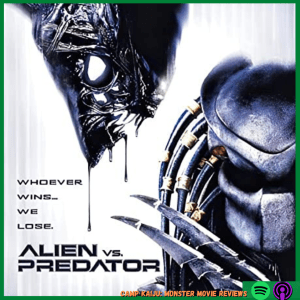
5. Alien vs. Predator (2004) dir. Paul W.S. Anderson
AVP tells just the sort of adventure story you’d hope for. A little pulpy, the addition of ancient lore adds a nice wrinkle to the mythos of each franchise. Furthermore, the location of a time-forgotten pyramid provides danger itself; it is laden with booby-traps that work to isolate the humans from each other. All together, it is an interesting backdrop to watch the movie unfold.
What is less interesting, however, are the humans themselves. While the extraterrestrials are treated with great care (benefiting from a commitment to practical effects), the people suffer from shoehorned scenes and cornball dialogue. Have two characters trapped in a room together? Have them talk about their kids. The main character insists on turning around? Have members of the team unfurl guns to the contrary. Campy at best, hamfisted at worst, it all seems obligatory in the end. Sanaa Lathan, as the main character Alexa Woods, is the only one to rise slightly above the fray. Her interactions with the last Predator standing are somewhat nuanced; it is genuinely cool seeing them partner up.
Can you completely fault Alien vs. Predator for failing its human ensemble? Not really. The movie succeeds in enough other facets (such as atmosphere, action, world-building, and effects) to make this a worthwhile experience for fans of both Predator and Alien.

6. The Predator (2018) dir. Shane Black
Ultimately, The Predator, is a series of plot devices shakily tied together. It suffers from problematic portrayals of mental health and the crude execution of special effects. Those effects, however, are inspired and push the series into an interesting (some may say boldly stupid) direction. It may be a flawed film, but The Predator leans into its flaws harder than any other film out there.

7. Aliens vs. Predator: Requiem (2007)
dir. Colin Strause, Greg Strause
Unlike its predecessor, Alien vs. Predator: Requiem, offers zero repeat value. Even the Predator itself is given little to do, mopping up Xenomorph kills more than anything else. Overdrawn, needlessly violent, and full of cardboard characters, AVP:R should only be endured as part of a larger Predator or Alien marathon.
by Vincent S. Hannam
 Camp Kaiju