Rest in peace to William Friedkin, the American director who mastered such genres as horror, action and suspense. He’s responsible for helming at least two of the greatest car chases ever filmed, in The French Connection (1971) and To Live and Die in L.A. (1985). (Some would argue that his 1995 film Jade has another car chase worthy of acclaim, though that’s one of the few bright spots in an otherwise half-baked movie.) Friedkin made what is still the scariest film of all time, The Exorcist (1973), despite that movie’s questionable themes: a force of evil originating in the Middle East plagues a single mother who’s just gone through a divorce, and it’s only the Catholic church that can step in and restore their domestic order. Speaking of visceral but dubious themes, Friedkin’s Cruising (1980), in which Al Pacino’s undercover cop infiltrates the gay leather scene of New York City to catch a killer targeting gay men, remains controversial for its supposed homophobia, though I would argue that the movie is more about homophobia than it is homophobic itself. His best movie is probably Sorcerer (1977), an astounding existential remake of The Wages of Fear (1953). Friedkin’s late-career work, after he had fallen from the heights of Hollywood celebrity, offers plenty of startling and complicated fare, including Bug (2006) and Killer Joe (2011). In short, few American filmmakers brought as much stylistic flair and subversive commentary into genre work as compellingly as Friedkin.
Director: William Friedkin
Producer: Joe Wizan
Writers: Stephen Volk, Dan Greenburg & William Friedkin (based on the novel by Dan Greenburg)
Cinematographer: John A. Alonzo
Editor: Seth Flaum
Music: Jack Hues
Cast: Jenny Seagrove, Dwier Brown, Carey Lowell, Brad Hall, Miguel Ferrer, Natalia Nogulich, Pamela Brull, Gary Swanson
Runtime: 92 minutes
Country of Origin: USA
US Release: April 27, 1990
Friedkin’s filmography also has its fair share of duds, though, and The Guardian is commonly considered the worst among them (even Friedkin himself admitted as much). Released in 1990, The Guardian followed a dry stretch for Friedkin, as his fertile 1970s suddenly dried up a decade later: aside from To Live and Die in L.A., he directed several music videos (for Wang Chung and Barbra Streisand) and some TV episodes and movies. (I would argue that Friedkin was a victim of Hollywood’s turn away from the New American Hollywood toward mega-blockbusters in the wake of Jaws and Star Wars: suddenly, there was no room for auteurs in Hollywood anymore.) The Guardian‘s lowly reputation is largely unwarranted, though: it’s an entertaining, ultra-stylish B-movie, an opulent oddity in Friedkin’s career.
The story follows a nanny, Camilla (Jenny Seagrove), who turns out to be a druid with a mystical connection to an ancient, malevolent tree; her job allows her to steal infants and offer them as sacrifices to her arboreal master. Initially, the story was supposed to have nothing to do with evil trees or even supernatural druids, as the source novel by Dan Greenburg, The Nanny, was simply about a child-snatching nanny. Friedkin insisted upon the story changes after he came aboard the production (replacing Sam Raimi, who left to direct Darkman). Contorting the narrative to suit Friedkin’s newfound obsession with hamadryads proved too strenuous for co-screenwriter Stephen Volk, who suffered a nervous breakdown and had to leave the production. Meanwhile, the script kept undergoing changes at the behest of Friedkin (and Universal Studios, who wanted a supernatural thriller in the vein of The Exorcist).
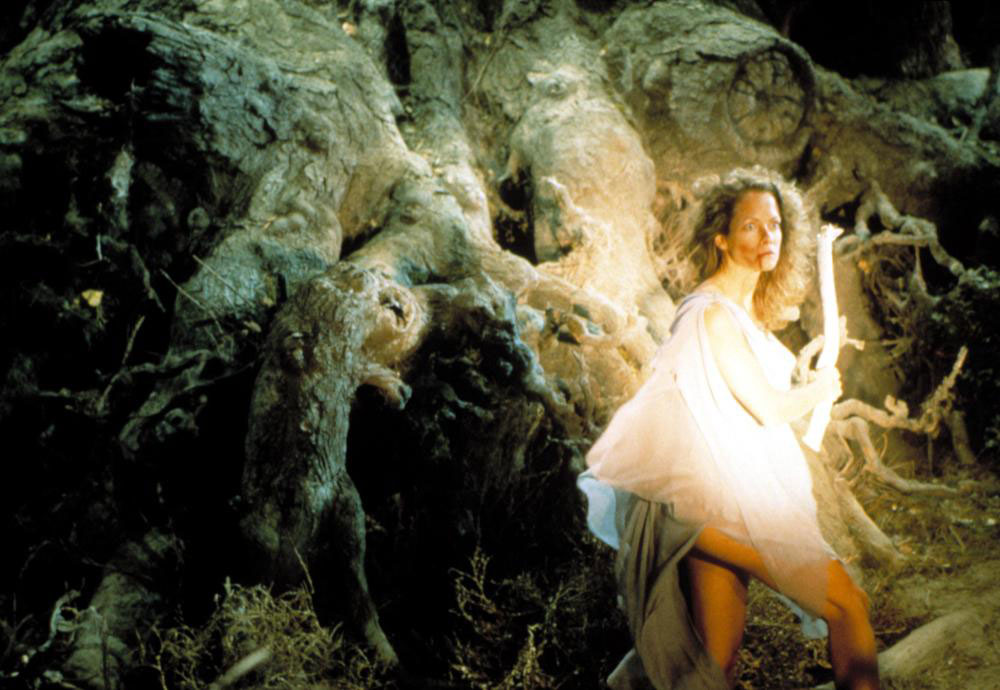
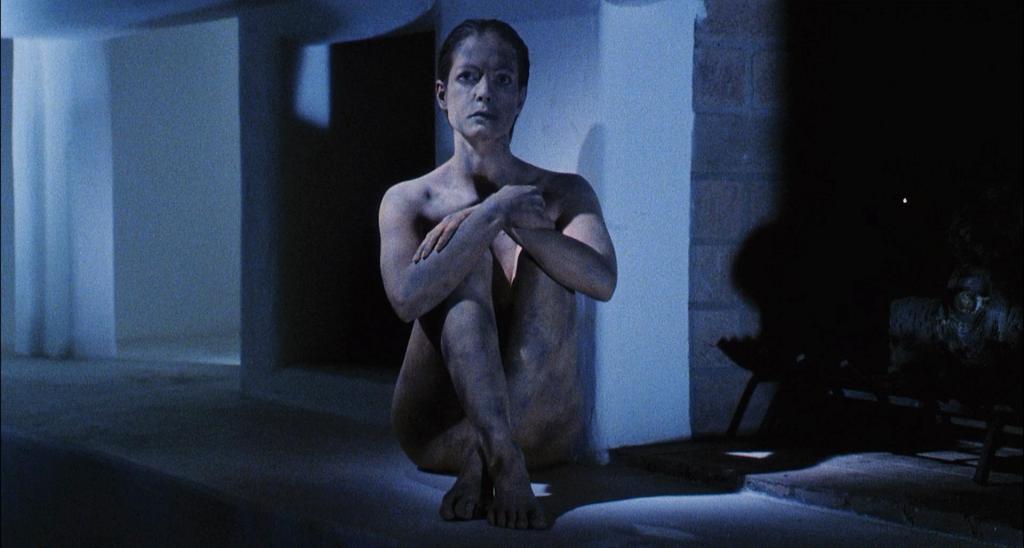
Given all these production difficulties, it’s no wonder The Guardian was critically maligned. It’s messy and undeniably silly (like when Camilla levitates through the air as she chases the father of a baby she’s abducted). But The Guardian is truly a stylistic marvel, and its ridiculous story leads to a lot of striking images, like a shot of a baby’s hand held aloft in the foreground and a wolf’s glowing orange eyes in the background that will haunt my nightmares. Not many directors outside of Friedkin would have developed such a precise and beautiful aesthetic for such an absurd concept; he and cinematographer John A. Alonzo create something gorgeous out of over-the-top genre formula (you just never really see light like this in movies anymore).
Some more thematic depth and emotional impact might have been nice. There should be an opportunity to dissect the supposed sanctity of the domestic space in modern America, especially for upper-class families like the ones featured here. The Guardian ends up as a purely formal experience, without much to interpret or analyze at its core, but that’s not entirely a criticism: there are marvelous, surreal images here that could never be seen in a more pedigreed work. It’s too hokey to be truly great, but on the other hand, this is why I love horror movies so much: even something kinda dumb can be more visceral, more unique, and more exhilarating than a “good” movie in many other genres.
written by Matthew Cole Levine
 Camp Kaiju